Blog-hopping

Today’s post is something a little different. I’m participating in a “blog hop,” an effort by some of us bloggers to introduce readers and each other to other interesting blogs. It includes answering four questions to give an idea of why we write and how our blogging process works.

One of my fellow blog hoppers is Denise Powers, an American in Paris who, when she moved there, created her blog “I Would Read That.” Denise and I were in a writing group a few years ago, and I’ve loved keeping up with her through her very funny, sharply written posts about life in France with her French poodle, Ferdinand. Here are a few bon mots:

“Apparently standard poodles are virtually unknown in France, except by reputation, much as one might know of a hippo or a giraffe, but never expect to meet one on the street.”

One of the things I love about Denise’s blog is living vicariously through her. Many of us dream of one day picking up and moving to another country, and she actually did it.

Also check out “Literary Mileage,” a blog from another wonderful writer, Judy Leaver. She splits her time between Washington, DC, and South Florida, balancing supporting herself through writing while living a fun and art-filled life. For instance, currently Judy is living in Mexico for a month, studying Spanish.

OK, so here are my brief answers to the four questions:

1. What am I working on (think about that metaphorically)?

The short answer is that I’m usually working on a) being a better person — because it’s often so hard; and b) finding the humor in being human.

2. How does my work differ from others of its genre?

I’m not sure it really does. I write about what I’m thinking about, what I’m observing. So it differs from other first-person writing in that it’s coming from me. It’s my voice, for better or worse.

3. Why do I write what I do?

I write for sanity, for clarity, for my own enjoyment and hopefully for others’ too. In writing something specific, hopefully I can touch upon something universal. Writing can be frustrating and confounding and the hardest pursuit imagineable when you’re trying to figure out what you want to say. But when you’ve written what is true and in the way you want to, it’s extremely satisfying.

4. How does your writing process work?

I’m a deadline-oriented person (I used to work in newspapers, the perfect job for procrastinators), so this blog is supposed to act as my external deadline, my place to publish. I have set up a system to try to meet my (internal) blogging goal of once every two weeks by having to “turn in” a piece to “an editor.”

This seems to be working pretty well for me, with the exception of these past two months. I look forward to summer and hopefully more writing since I was inspired to begin this blog last summer.

Bonus question: Is there a better word than “summer”?

Definitely not.
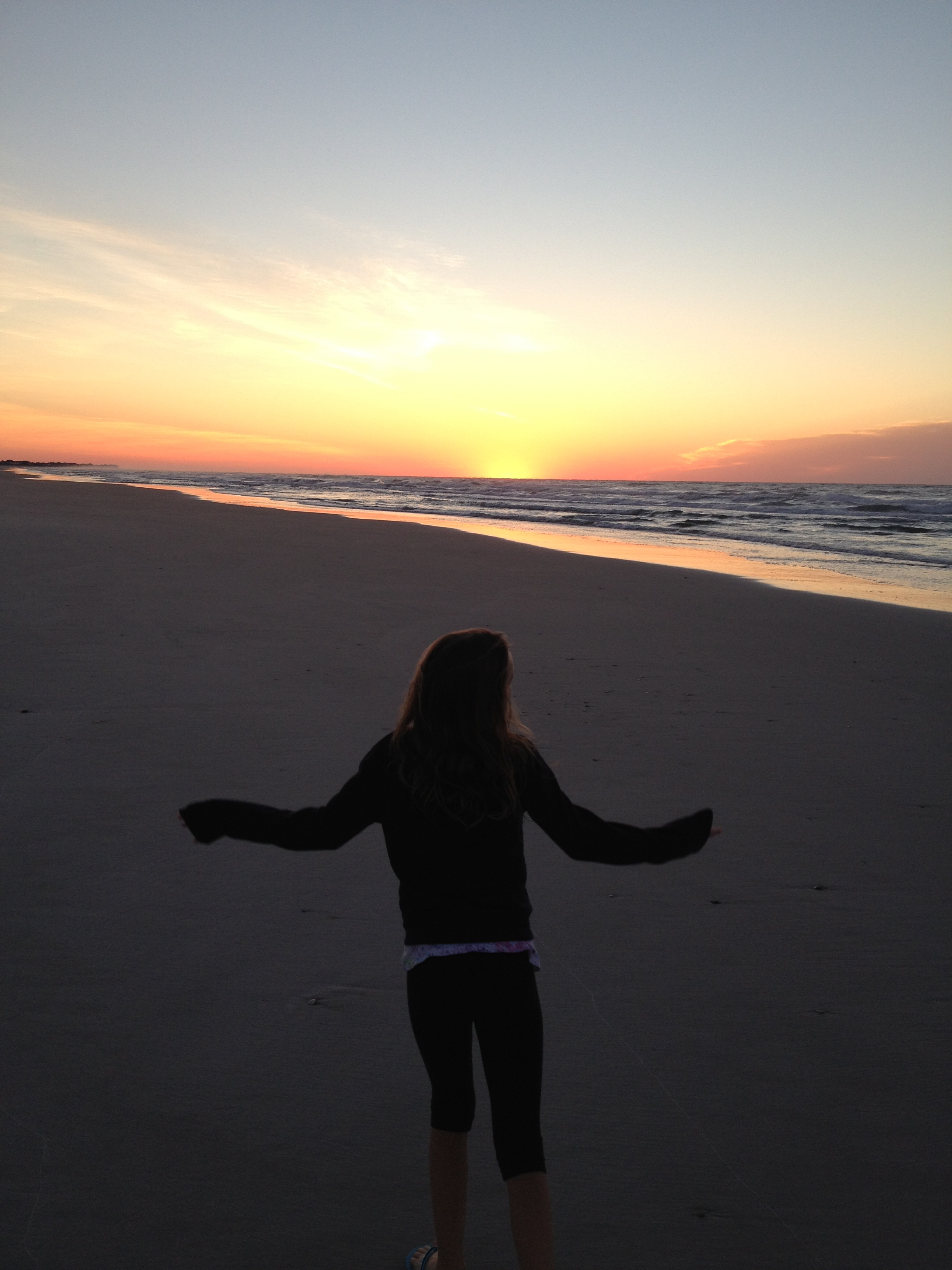
Blog-hopping and dreaming of the beach

Paper Girl

An organizer I once hired in desperation told me that everyone has a collection, and mine happens to be paper.

I confess to being a “piler” too. I have stacks of books and magazines on my dresser, by my bedside, and underneath the table in a basket. I usually only attack these piles when, like Herbert in the Miss Piggle Wiggle story who never picks up his toys, I can’t get to what I need because of all the stuff in the way. My hairbrush might be hidden under layers of paper I’ve amassed — in-progress writings, half-read magazines, blank pads for scribbling lists or brilliant ideas. Just paper, paper, paper.

I treasure it, I realize. My children’s once-in-a-lifetime-snapshots-of-a-moment-in-time crayon drawings. My oh-so-precious journals and notebooks from the past that should probably stay there. Old calendars with gorgeous pictures, inspirational quotes, and a year’s worth of living chronicled in its small squares.

Paper may be passe, but it’s so much more to me.

Yes, I am capable of throwing out and often do, but I know I keep things I shouldn’t. It’s just so hard. Jettisoning all of the Disney World buttons our family got while celebrating my recent birthday feels like I’m dismissing the specialness of the trip. Imprinted with each of our names, they’re little signs made to be saved. Maybe my children want these! I need to remember to ask! So, the buttons sit, waiting patiently on my dresser for the verdict on their fate.

I love and dread walking into a bookstore. Like a dieter in a bakery, I am tempted. Row upon row of sweet delights. Who can resist?

The magazine rack in the grocery store line always beckons, but I usually manage to put the publication back before buying. I’m one of those people you see reading and holding the magazine with one hand while blindly placing items on the belt with the other.

“M’am, can you push your cart up, please?”

“Oh!” I say, looking up and hurriedly stuffing “Allure” back in the wrong rack. What was the name of that Editor’s-Pick lipstick again?

Paper for me means information, inspiration, emotion. If I throw it away, I might lose what lured me in the first place. I think, when I’m old and forced to slow down, to sit and contemplate, I can take solace in sifting through all that paper, all those memories. Maybe then, and only then, will I throw them out.

We yearn to capture experience, to own it, absorb it into our bones. I remember when I was 12 and my cousin Margaret, a poet, took me to visit our aunt in Washington, D.C. After the trip, she wrote a poem titled “Smithsonian Album” that describes much of what we saw and did.

Contained in a slim volume on my bookshelf, the poem is an ode to our time together, presented and preserved on (naturally) paper. Yet only now, decades later, do I see that the poem also touches on  — almost casually, like a flip of the hair — that impossible yearning in all of us. The ending:

Save?
What will you save?
The gusty afternoon
a bit of laughter
the pin-prick of aching feet.
And what of “relief”
and Joan Miro
what of Rodin, abstract
the green mall
the water buffalo?

All these picture postcards–
learn to keep them
learn to let them go.

(Reprinted with permission from Margaret Boothe Baddour. Click on title above or here to see full poem.)

The front of a Mother's Day card my daughter made. She has no idea what an accurate depiction of it really is.
The front of a Mother’s Day card that my daughter made — an unwittingly accurate depiction of what my world sounds like.


Happy ‘Do’ Year

Resolution. The word of the new year, the word of now. We are resolving to start anew, set a goal — lose those pounds, finish that project, clear out the clutter. There are so many resolutions.

But what of this word “resolution”? What does it mean? One definition is “a firm decision to do or not to do something.” It’s a word of doing, not one of thinking, or musing, or considering. As Diana Nyad, the 64-year-old who finally succeeded on her fifth try to swim from Cuba to Florida, said in her recent TED talk (quoting Socrates): “To be is to do.”

“Resolution” also brings to my mind, at least, the idea of re-solution. Re-solving. The idea of “again.”  Maybe we start an entirely new project, but more than likely we find ourselves staring discontentedly at a familiar picture. Often our impulse is to throw it out and start over completely, but more than likely all we really need to do is add a smidge of color here, take away a shadow there, paint over a few drips. A tweaking.

I know I do this in my own life — I often think I need to wipe the slate clean, approach life with a “whole new attitude,” go for the sea change. I think, I should cook family meals every single night! I should write for an hour every single day! I should take up piano lessons again! Naturally, that’s a setup for failure. Not to mention it just makes me want to go watch “Modern Family.” Besides, what if we actually did achieve these things? Would that really bring us ultimate happiness — or whatever it is we think we’re looking for?

What I’m starting to realize, unexciting as it may be, is that I just need to do things a little differently. Shift slightly. Decide to turn on the oven a couple of times a week. Sit down at the piano instead of walking past it. Bother to craft a good email. Baby steps.

Our resolutions relate to issues we face again and again. And there’s nothing wrong with resolving to “solve” them again and again. That’s really what life is about. Usually, we don’t have a bunch of new problems. We have old ones that are still there. And most of the time, there’s no solution. Instead, it’s a daily struggle. That’s why in disciplines like yoga, or music, or writing — in just about everything — the word “practice” is used. We practice at life. And we do it every day, every hour, every minute. Practice doesn’t make perfect, but it does make better.

As the author Eckert Tolle suggests, “Die to the past every moment.”  No matter what has happened in the past, all we truly have is the present. All we have is Now. Every moment presents a chance to “do” and “do” again. All year long, all life long

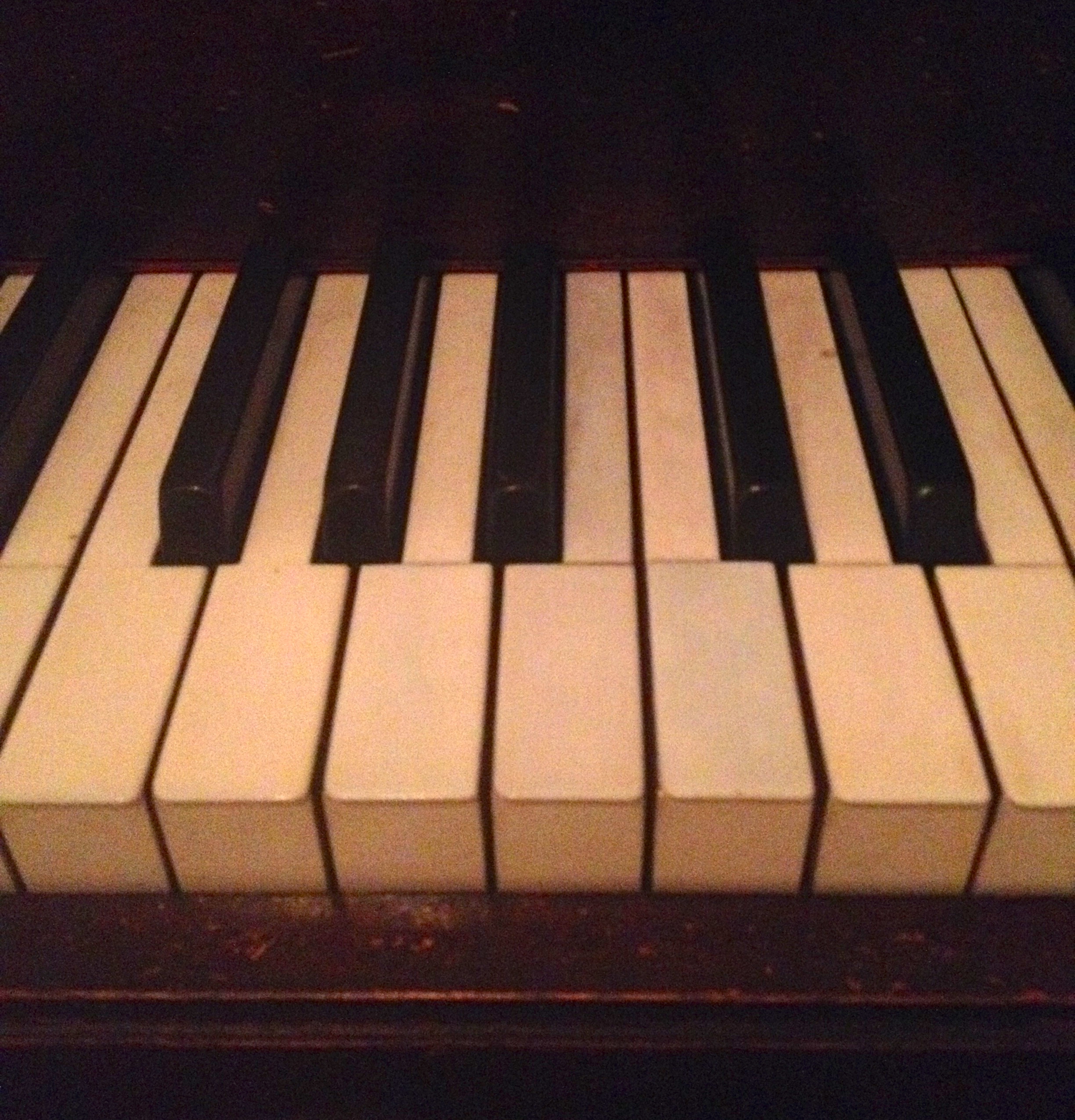
The keys await… (Maybe if they were cleaner I'd be more likely to play them.)
The keys await… (Maybe if they were cleaner I’d be more likely to play them!)

Running, Writing, Striving

Note: This entry is not an actual song-title prompt, but this song is on my running playlist and came on when I was thinking about the topic, below.

Song Title: “Doors Unlocked and Open” by Death Cab for Cutie (from Codes and Keys album)

As I lope along the shoreline, compulsorily glancing out over the glistening sea, it occurs to me that running and writing — both interests of mine — are a lot alike. Each requires an elaborate preamble that sometimes takes longer than the activity itself. Before running (especially at the beach) wind and temperature must be checked for optimum conditions, sunscreen liberally applied, shoes laced just so, playlist cued up, ipod running app ready. Then, when I’ve covered every other procrastination angle, I go to the bathroom … again.

During the run itself, I try to enjoy it, and sometimes that actually happens. I run with ease, not constantly trying to catch my breath. My body feels light and my mind wanders in a good way. Basically, I’m not slogging. But more often than not, my legs feel heavy, I frequently check time and distance, and I talk to myself as I would a whiny child: “Just to that yellow house,” “Only a half-mile to go,” “C’mon, don’t be a pansy!”

Similarly, I have to be in the “right” frame of mind to write. Usually this means bills have been paid, email checked (in at least the last 15 minutes), caffeine ingested, kids asleep or otherwise occupied, husband ensconced in his office, and no latest episode of “Mad Men” burning up the DVR queue.

When I finally start writing, there are those rare occasions when the words flow easily. But much of the time it is a start-stop situation, like a car with a bad battery. Sometimes I will get a text or call with an “urgent” issue. Every 20 minutes or so I have to get water or check my spam folder. A professional organizer once told me after some observation that I had about a 90-minute attention span. And she didn’t mean 90-minute increments. She meant for the whole time. That’s not SO bad, right? Well, ok, for a child…

But if I can get the battery going, I’m usually writing for something like that 90-minute span. Or at least to the point that I’ve feel like I’ve written SOMETHING. Sometimes I quit in the middle of a thought, so that I know where to pick up the next time. I heard Ernest Hemingway did that.

I love Anne Lamott’s comparison of the writing process to advice her father once gave her brother, who hadn’t begun a report on birds that was due the next day: Take it “bird by bird.” (That’s also the title of her book — one of the best ever on writing.) Running, and writing even, is just one foot in front of the other (even if your shoulders are hunched over) til you’ve gone far enough to catch your breath. And at that point, occasionally, it gets easier and you keep going.

I was thinking of the word “strive” and how it seems to encapsulate both “try” and “strength.” First, you have to have the intention — the desire to try — and secondly, you need the strength to take those first few steps.

Seeing “Past My Shades”

This is the first in a series of posts based on song titles. For each entry I will randomly select a song title from my itunes library as a writing prompt. The title itself, and not the song’s lyrics, will be the prompt, although occasionally the lyrics might be relevant to what I end up writing about.

Song title: “Past My Shades” (by B.O.B. w/ Lupe Fiasco)

Maybe someone wearing the sunglasses doesn’t see anyone or anything beyond himself or herself, is someone whose world view is skewed inward — so that all he is thinking about is his own fabulousness, his own brighter light, one that outshines everyone in comparison. Or maybe the sunglasses wearer is hiding behind the image she wants to protect, distancing herself from the world. What’s back there? It’s murky and dark. With both — and each in their own way — self-absorbtion is the theme.

This idea of self-absorption is something that’s come up a few times lately in my life. First, we are all self-absorbed to a certain degree. After all, we can only be within ourselves, our own mind, and our own bodies. Yes, we can empathize, and put ourselves in someone else’s shoes, but then again, if one is completely selfless, doesn’t that insinuate a degree of self-removal, of distancing, of lack of intimacy? A narcissist at least puts themselves out there for all to see and to understand — and to judge.

Which brings me to the idea of writers, memoir writers, specifically. Often writers are encouraged to tell their story — because everyone’s story is important. Each one of us, it is often said, has a story to tell. Plus, writing can be incredibly therapeutic (not to mention free). Yet in the act of doing so, aren’t we absorbed in self? Some would even say obsessed? What about the idea of getting outside of oneself as therapy, as really living?

When does honest self-exploration risk becoming shallow self-obsession?

Maybe when the shades are on. With them, the memoir writer could be seen as self-involved and over-sharing. Or maybe he is masking the parts of himself he doesn’t want the world to see. It’s selective revelation. One assumes some self-editing in the shedding of the layers, but is there an image the writer wants to project or protect?

It seems to me that at some point the writer has to toss the shades, to stop controlling and start trusting. And when that happens, what the writer is offering up to the world becomes less about himself or herself personally (and obsessively) and more about the human experience in general. As a wise person once noted to me, sharing is a generous act. It’s also an honest one.

In “The Art of the Personal Essay,” Phillip Lopate writes: “The trick is to realize that one is not important, except insofar as one’s example can serve to elucidate a more widespread human trait and make readers feel a little less lonely and freakish.”

Here’s to hopefully feeling a less freakish.