Van is Still the Man

My husband says when we were dating many years ago as 20-somethings in DC, I informed him, “People in Washington don’t dance.”  I’d love to dispute it, but I know in my then too-cool-for-school-and-beyond mode this was my excuse for not dancing.

I have always been a bit self-conscious when it comes to dancing and marvel at those who can let loose — and look good doing it. I see my son practicing moves in front of the mirror now and think, good for you. I was even too cool for that, back in the day. Oh, I remember dancing in front of the wall of windows in our den when I was a kid, admiring the reflection of my show-bizzy tap and jazz steps, but that was me trying to emulate Ginger Rogers in the movies, not Britney Spears on the dance floor.

So my husband might find it interesting — and my kids mortifying — to hear what happened the other morning when I met up with two friends walking dogs in the neighborhood park. “Tess” was holding an iphone up to her ear, trying to hear Neil Young’s “Til the Morning Comes” that “Dana” was playing. Loving any excuse to hear music or get a recommendation, I leaned in and listened too. Then Dana insisted on playing a Van Morrison song, and for the next 20 or so minutes, we proceeded to walk our dogs around the park, playing music from our iphones and reminiscing about favorite songs from the ‘70s and beyond. Maxine Nightingale’s upbeat “Get Right Back” took us right back, as did the intensity of Kate Bush (“Wuthering Heights”) and Tori Amos (“Cornflake Girl,” from the ’90s).

Eventually, having trouble downloading a song from YouTube, Dana directed us back to her car parked on the street so she could play a CD on her stereo. It all started off benignly enough. We stood on the leafy sidewalk, the car doors flung open, and listened to Morrison’s meditative “Whenever God Shines His Light.” Then she played Elton John’s folky “Captain Fantastic and Brown Dirt Cowboy,” which I’d never heard. We were in the mellow singer-songwriter era, hanging out as though at a tiny tailgate party, although the tunes emanating from the auto were so loud that we glanced around for annoyed neighbors.

“Wow, those are some powerful speakers,” Tess remarked. We laughed and looked at each with raised eyebrows.

Suddenly, Dana ducked into the car and cranked up the disco-y “Get Lucky” by Daft Punk, and before you could say Studio 54, the three of us were shaking our hips and waving our hands overhead. We boogied on down and showed off our moves as Tess demonstrated a line dance I suspect was her version of the once-ubiquitous “Bus Stop.” (Boy, am I aging myself here.) By now, the dogs had plunked themselves down on the bricks, gazing up at us like kids waiting for their parents to stop socializing at the soccer game.

We ended our impromptu dance party with vows to do it again soon (the Dog-Walking Dance Club?), and I left feeling energized and thankful for my just-nutty-enough friends who could cut loose on a weekday morning amid the towering trees and passing cars. I went home and immediately put on Van Morrison, downloading a few favorite songs I reveled in during college days.

I thought about how it’s so easy to stay wedded to routine, to never veer from the familiar path, to conform to your own notions of yourself. Who could have predicted that when I stepped out on a little jaunt with my dog that morning I would wind up dancing in the streets?

No surprise, Van says it best:

      “When it’s not always raining there’ll be days like this
      When there’s no one complaining there’ll be days like this
      When everything falls into place like the flick of a switch
      Well my mama told me there’ll be days like this.”
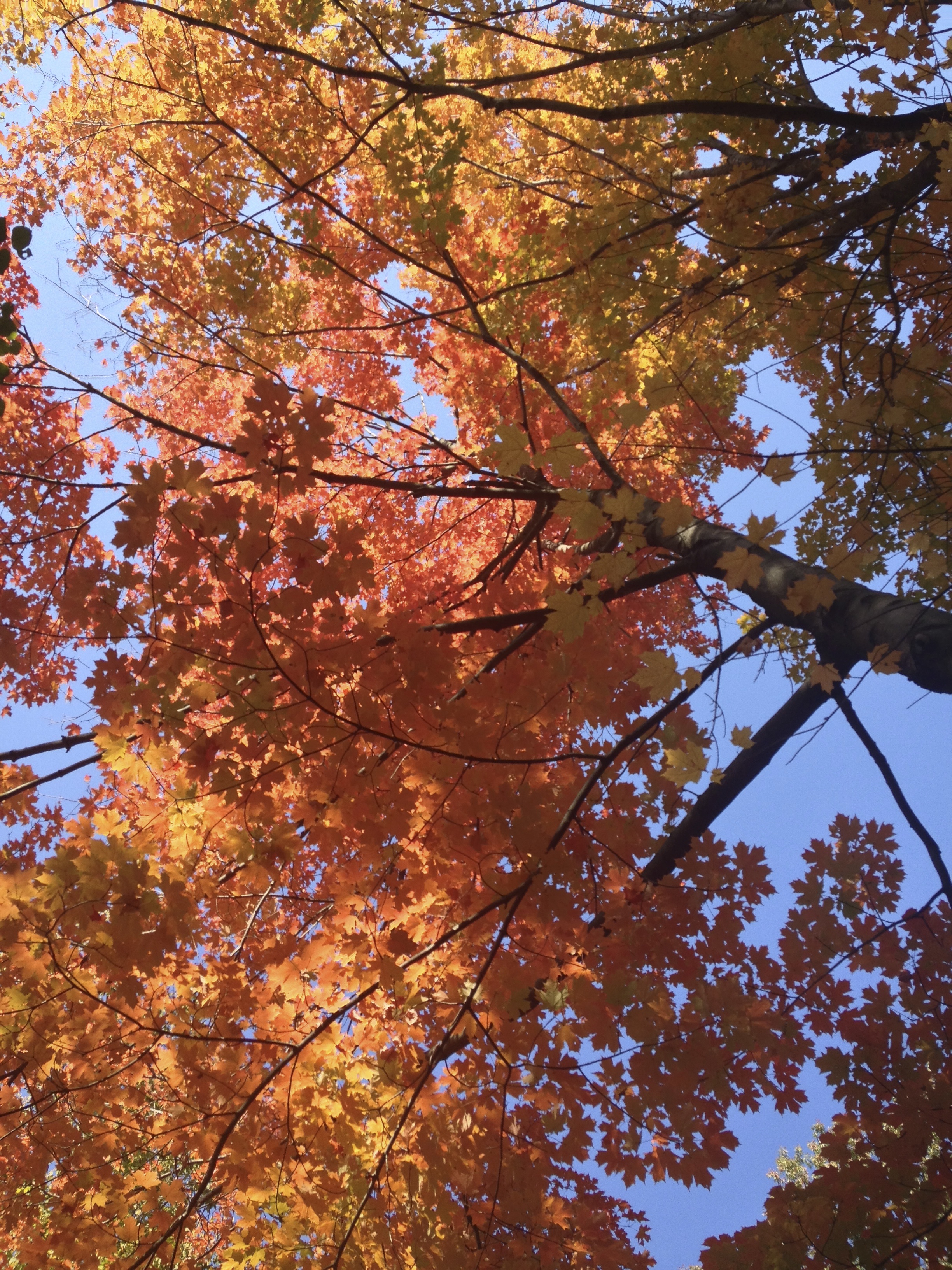
Love these fall days like this...
Love fall days like this…

Music Extra: Two Van songs below!

Running, Writing, Striving

Note: This entry is not an actual song-title prompt, but this song is on my running playlist and came on when I was thinking about the topic, below.

Song Title: “Doors Unlocked and Open” by Death Cab for Cutie (from Codes and Keys album)

As I lope along the shoreline, compulsorily glancing out over the glistening sea, it occurs to me that running and writing — both interests of mine — are a lot alike. Each requires an elaborate preamble that sometimes takes longer than the activity itself. Before running (especially at the beach) wind and temperature must be checked for optimum conditions, sunscreen liberally applied, shoes laced just so, playlist cued up, ipod running app ready. Then, when I’ve covered every other procrastination angle, I go to the bathroom … again.

During the run itself, I try to enjoy it, and sometimes that actually happens. I run with ease, not constantly trying to catch my breath. My body feels light and my mind wanders in a good way. Basically, I’m not slogging. But more often than not, my legs feel heavy, I frequently check time and distance, and I talk to myself as I would a whiny child: “Just to that yellow house,” “Only a half-mile to go,” “C’mon, don’t be a pansy!”

Similarly, I have to be in the “right” frame of mind to write. Usually this means bills have been paid, email checked (in at least the last 15 minutes), caffeine ingested, kids asleep or otherwise occupied, husband ensconced in his office, and no latest episode of “Mad Men” burning up the DVR queue.

When I finally start writing, there are those rare occasions when the words flow easily. But much of the time it is a start-stop situation, like a car with a bad battery. Sometimes I will get a text or call with an “urgent” issue. Every 20 minutes or so I have to get water or check my spam folder. A professional organizer once told me after some observation that I had about a 90-minute attention span. And she didn’t mean 90-minute increments. She meant for the whole time. That’s not SO bad, right? Well, ok, for a child…

But if I can get the battery going, I’m usually writing for something like that 90-minute span. Or at least to the point that I’ve feel like I’ve written SOMETHING. Sometimes I quit in the middle of a thought, so that I know where to pick up the next time. I heard Ernest Hemingway did that.

I love Anne Lamott’s comparison of the writing process to advice her father once gave her brother, who hadn’t begun a report on birds that was due the next day: Take it “bird by bird.” (That’s also the title of her book — one of the best ever on writing.) Running, and writing even, is just one foot in front of the other (even if your shoulders are hunched over) til you’ve gone far enough to catch your breath. And at that point, occasionally, it gets easier and you keep going.

I was thinking of the word “strive” and how it seems to encapsulate both “try” and “strength.” First, you have to have the intention — the desire to try — and secondly, you need the strength to take those first few steps.

Nightblindness

This is the second entry where I select a song title at random from my itunes library as a writing prompt.

Song title: “Nightblindness” by David Gray

I have had poor eyesight forever, or ever since I was in fifth grade, got glasses, and discovered the trees had leaves. I first wore wire rims, then classic coke-bottle glasses with brownish-purple plastic frames that I thought looked “cool” (read “hideous” and “why did my mother let me do that?”), which I wore through junior high school. After that I endured years of new-and-improved contact lenses — dealing with dry rubber eyeballs at the end of the day, searching for the invisible lens after dropping it, seeing the college boyfriend accidentally swallow one that I’d put in a glass of water. Finally, a few years ago, I got laser eye surgery, also known as Lasik.

It has been a godsend.

At the time, the doctor told me I was a “borderline” candidate, which meant that my near-sightedness was so bad (my prescription is -6) he couldn’t promise me 20/20 vision. And, he added, “You will definitely need reading glasses.”

For me, none of that mattered. The first time I didn’t have to poke a slippery translucent disc into my eye was my “Hallelujah” moment. After the operation itself (easy for some, but not my favorite, as my kids say), my newfound and naked vision was nothing short of a miracle.

However, a little over a year ago, I found myself squinting a lot. I mostly noticed because the little lines around my eyes had increased dramatically, and I was becoming alarmed. This had to be more than simply “aging.” And blobbing the most expensive eye cream (because that means it’s the best, right?) around my eyes day and night didn’t seem to help.

Additionally, at night while driving I realized all the lights were a bit blurry and I was sticking my neck out over the steering wheel like a turtle — as if that would make me see better.

Finally, I went for an eye exam, convinced that my vision had slipped about halfway back to “legally blind.” But actually, when the doctor told me the results — about 20/40 — she commented that it wasn’t “that bad.”

So you’re saying I’m just picky?” I joked.

“Basically,” she joked back (I think).

She added that it was possible my Lasik had initially over-corrected to better than 20/20 so I was used to seeing like Superman.

Well, maybe so, but I have to say, HD was working for me. So, I got glasses with the prescription she wrote, and I now wear them often while driving — and not just at night. I also use them at sporting events … and my kids’ performances … and, um, for watching TV. I definitely have not become dependent, though. I don’t wear them while sleeping or going out to dinner.

No, at dinner in order to read a menu, I now pull out the “cheaters,” those other glasses I carry in my purse, alongside the sunglasses (two pairs, in case I lose one) and the “night” glasses, which I had relegated to my car until I realized I really needed them for all that other stuff I just mentioned.

Lately, I’ve found myself walking into the house with my “driving glasses” on my head and then putting on my reading glasses at the computer, and realizing I look like a complete freak. Sometimes sunglasses are even hanging off the top of my shirt.

Yes, that seems like too many glasses. That’s what bifocals/trifocals are for, right? But then I’d have to say my Lasik was a complete waste. And besides, I really don’t want to wear glasses all the time.


Seeing “Past My Shades”

This is the first in a series of posts based on song titles. For each entry I will randomly select a song title from my itunes library as a writing prompt. The title itself, and not the song’s lyrics, will be the prompt, although occasionally the lyrics might be relevant to what I end up writing about.

Song title: “Past My Shades” (by B.O.B. w/ Lupe Fiasco)

Maybe someone wearing the sunglasses doesn’t see anyone or anything beyond himself or herself, is someone whose world view is skewed inward — so that all he is thinking about is his own fabulousness, his own brighter light, one that outshines everyone in comparison. Or maybe the sunglasses wearer is hiding behind the image she wants to protect, distancing herself from the world. What’s back there? It’s murky and dark. With both — and each in their own way — self-absorbtion is the theme.

This idea of self-absorption is something that’s come up a few times lately in my life. First, we are all self-absorbed to a certain degree. After all, we can only be within ourselves, our own mind, and our own bodies. Yes, we can empathize, and put ourselves in someone else’s shoes, but then again, if one is completely selfless, doesn’t that insinuate a degree of self-removal, of distancing, of lack of intimacy? A narcissist at least puts themselves out there for all to see and to understand — and to judge.

Which brings me to the idea of writers, memoir writers, specifically. Often writers are encouraged to tell their story — because everyone’s story is important. Each one of us, it is often said, has a story to tell. Plus, writing can be incredibly therapeutic (not to mention free). Yet in the act of doing so, aren’t we absorbed in self? Some would even say obsessed? What about the idea of getting outside of oneself as therapy, as really living?

When does honest self-exploration risk becoming shallow self-obsession?

Maybe when the shades are on. With them, the memoir writer could be seen as self-involved and over-sharing. Or maybe he is masking the parts of himself he doesn’t want the world to see. It’s selective revelation. One assumes some self-editing in the shedding of the layers, but is there an image the writer wants to project or protect?

It seems to me that at some point the writer has to toss the shades, to stop controlling and start trusting. And when that happens, what the writer is offering up to the world becomes less about himself or herself personally (and obsessively) and more about the human experience in general. As a wise person once noted to me, sharing is a generous act. It’s also an honest one.

In “The Art of the Personal Essay,” Phillip Lopate writes: “The trick is to realize that one is not important, except insofar as one’s example can serve to elucidate a more widespread human trait and make readers feel a little less lonely and freakish.”

Here’s to hopefully feeling a less freakish.